
Cybersecurity Reference > Glossary
What is Identity Lifecycle Risk?

These aren't theoretical concerns. Every time someone joins a company, switches departments, or walks out the door for the last time, access rights need to change. When they don't change correctly or quickly enough, organizations face real exposure.
The transition points create the biggest problems. New hires might get provisioned with excessive permissions because IT copies access from someone who'd accumulated rights over years. Mid-career role changes often add new access without removing the old, a phenomenon called privilege creep. But departures present the most dangerous window: former employees who retain system access after their last day represent a documented vector for data theft and sabotage.
Beyond these transition risks, organizations contend with orphaned accounts that were never properly completed, dormant credentials that sit active but unused, and access reviews that happen too infrequently or superficially to catch inappropriate permissions. Each of these conditions expands the attack surface. An adversary who compromises one overlooked account inherits whatever access that identity retained, whether or not anyone still uses it. Managing identity lifecycle risk means treating provisioning, modification, and deprovisioning as security-critical operations, not just HR paperwork.
Origin
The concept gained urgency as organizations accumulated more systems. An employee in 2000 might need five accounts; by 2010, that number had multiplied to dozens spanning on-premises applications, cloud services, and partner systems. Each account represented a potential security gap if not managed consistently.
Early approaches focused on provisioning automation—using HR systems as sources of truth to trigger account creation. But practitioners quickly learned that creating accounts was the easy part. The harder challenges involved adjusting access as roles changed and, critically, ensuring complete removal of access when employment ended. Studies in the mid-2000s revealed that substantial percentages of terminated employees retained system access weeks or months after departure.
The "lifecycle" framing became standard as the industry recognized that identity security wasn't just about authentication strength. It required managing the entire journey of each identity, with particular attention to the handoff points where things typically broke down. This perspective shifted identity from an IT convenience function to a core security control.
Why It Matters
The complexity of contemporary IT environments amplifies the risk. An employee today might have access to multiple cloud platforms, SaaS applications, internal systems, partner portals, and development environments. Each of these needs proper lifecycle management, and each represents a potential oversight. Cloud environments in particular create challenges because access can be provisioned quickly and informally, sometimes outside official IT channels.
Compliance frameworks now explicitly address identity lifecycle controls. Regulations require organizations to demonstrate they grant access appropriately, review it periodically, and remove it promptly when no longer needed. Audit failures in this area carry real consequences.
The shift to remote and hybrid work has made lifecycle risk more acute. When employees aren't physically present, the informal mechanisms that once helped identify inappropriate access—noticing that someone from accounting was accessing engineering systems, for instance—no longer operate. Organizations need technical controls and automated monitoring to catch what used to be visible through proximity and conversation.
The Plurilock Advantage
We implement access review processes that actually identify inappropriate permissions rather than becoming rubber-stamp exercises. Whether you need zero-trust architecture that treats every access request as a new decision point or IAM modernization that brings legacy systems under lifecycle control, our approach delivers functional security, not just policy documents.
Learn more about our identity and access management services.
.
Ready to Minimize Identity Lifecycle Risks?
Plurilock's identity governance solutions help organizations secure user access throughout the entire lifecycle.
Get Identity Governance Help → Learn more →Downloadable References
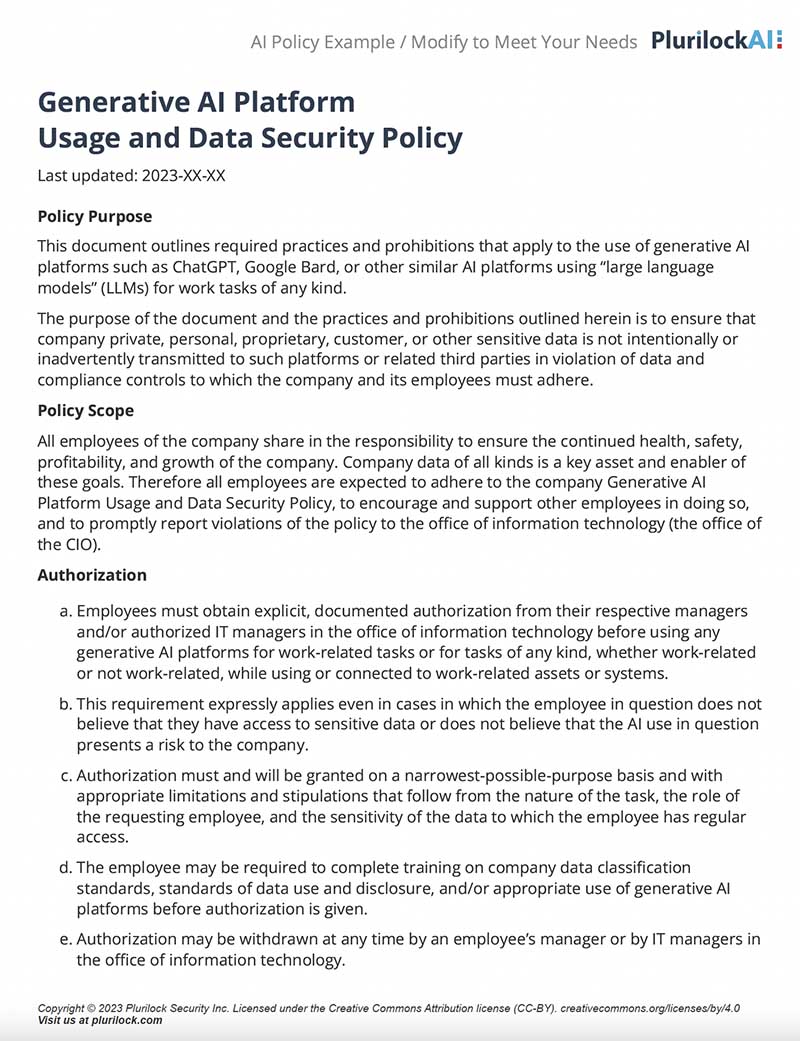
Sample Governance Policy for AI Use
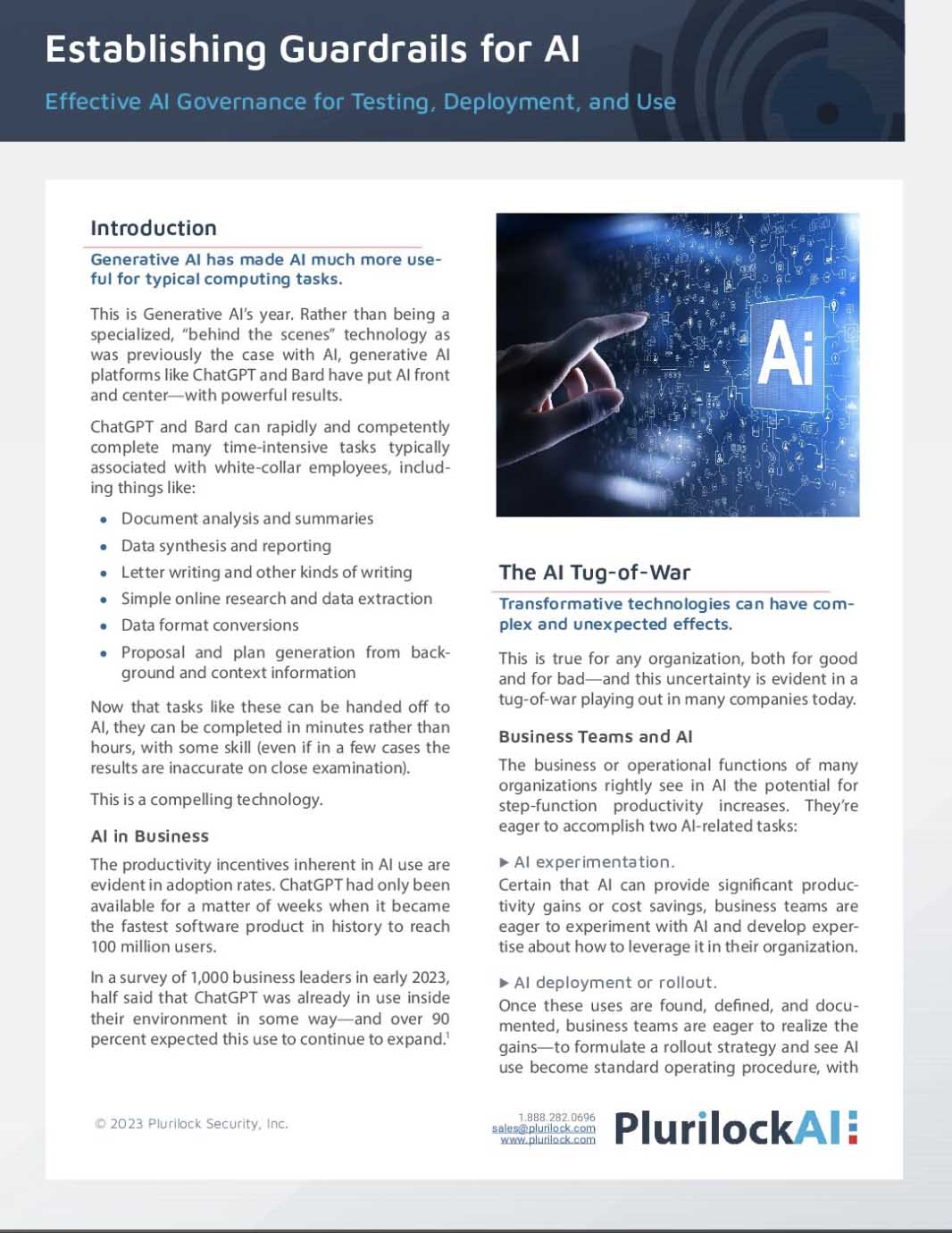
Establishing Guardrails for AI Whitepaper