Cybersecurity Reference > Glossary
What is Privileged Identity Exposure?




This can occur through misconfigured systems, weak access controls, stolen credential databases, or targeted social engineering. The exposure might be as obvious as hardcoded passwords in public code repositories or as subtle as overly permissive directory permissions that let lower-privilege users see credential stores.
These exposures matter because privileged accounts hold the keys to everything. An attacker with admin credentials can move laterally across networks, exfiltrate sensitive data, alter system configurations, disable security controls, or establish persistent access that survives standard remediation efforts. The breach often starts small—a single exposed service account password—but the potential blast radius is enormous.
Organizations typically discover privileged identity exposures through security assessments, penetration tests, or breach investigations. Prevention requires privileged access management solutions, strict adherence to least privilege principles, regular credential rotation, and mandatory multifactor authentication for any elevated access. Monitoring privileged account activity helps catch misuse early, while just-in-time access models reduce the window of opportunity for attackers by granting elevated privileges only when needed and automatically revoking them afterward.
Origin
As networked computing expanded through the 1980s and 1990s, the attack surface grew. Root accounts on Unix systems and Administrator accounts on Windows networks became prime targets. The Morris Worm of 1988 exploited weak passwords and trust relationships, demonstrating how compromised privileged accounts could propagate threats across networks. This incident marked an early recognition that credential management wasn't just an administrative concern but a security imperative.
The term "privileged identity exposure" gained currency in the 2000s as organizations faced increasingly sophisticated attacks. High-profile breaches revealed attackers specifically hunting for admin credentials through techniques like pass-the-hash and credential dumping from memory. The problem intensified with cloud computing and DevOps practices, where service accounts and API keys proliferated, often stored insecurely in configuration files or code repositories. What was once a manageable set of administrator accounts became thousands of privileged identities scattered across hybrid environments, each representing potential exposure.
Why It Matters
The problem has intensified with cloud adoption and containerized infrastructure. Traditional privileged accounts now share space with service principals, API keys, SSH keys, and OAuth tokens—each capable of granting broad access if exposed. Development teams often embed credentials in application code or store them in version control systems for convenience, creating exposure that persists even after the immediate need passes. Automated scanning of public code repositories regularly discovers thousands of exposed credentials daily.
Regulatory frameworks increasingly recognize this risk. Standards like PCI DSS, HIPAA, and various zero trust frameworks mandate specific controls around privileged access management. Breach disclosure requirements mean that organizations face not just technical remediation costs but legal liability and reputational damage when exposed privileged credentials lead to data theft. The shift toward remote work has complicated matters further, as privileged access must now traverse home networks and personal devices, expanding the attack surface considerably beyond the traditional corporate perimeter.
The Plurilock Advantage
We implement modern PAM architectures integrated with your existing systems, establish just-in-time access workflows that minimize credential lifetime, and deploy continuous monitoring that flags suspicious privileged activity in real time.
Our identity and access management services help organizations move from credential management to true privileged identity governance, reducing both exposure and operational friction.
.
Need Help Securing Privileged Identities?
Plurilock's identity security solutions can protect your most critical administrative accounts.
Secure My Privileged Accounts → Learn more →Downloadable References
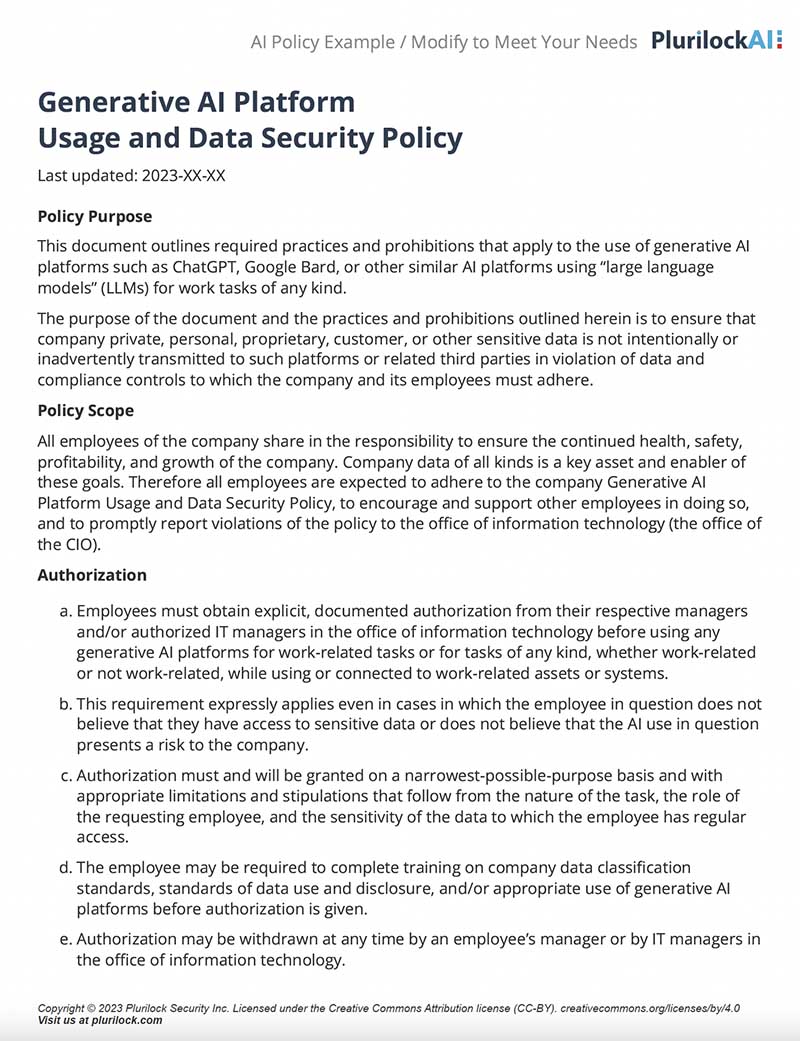
Sample Governance Policy for AI Use
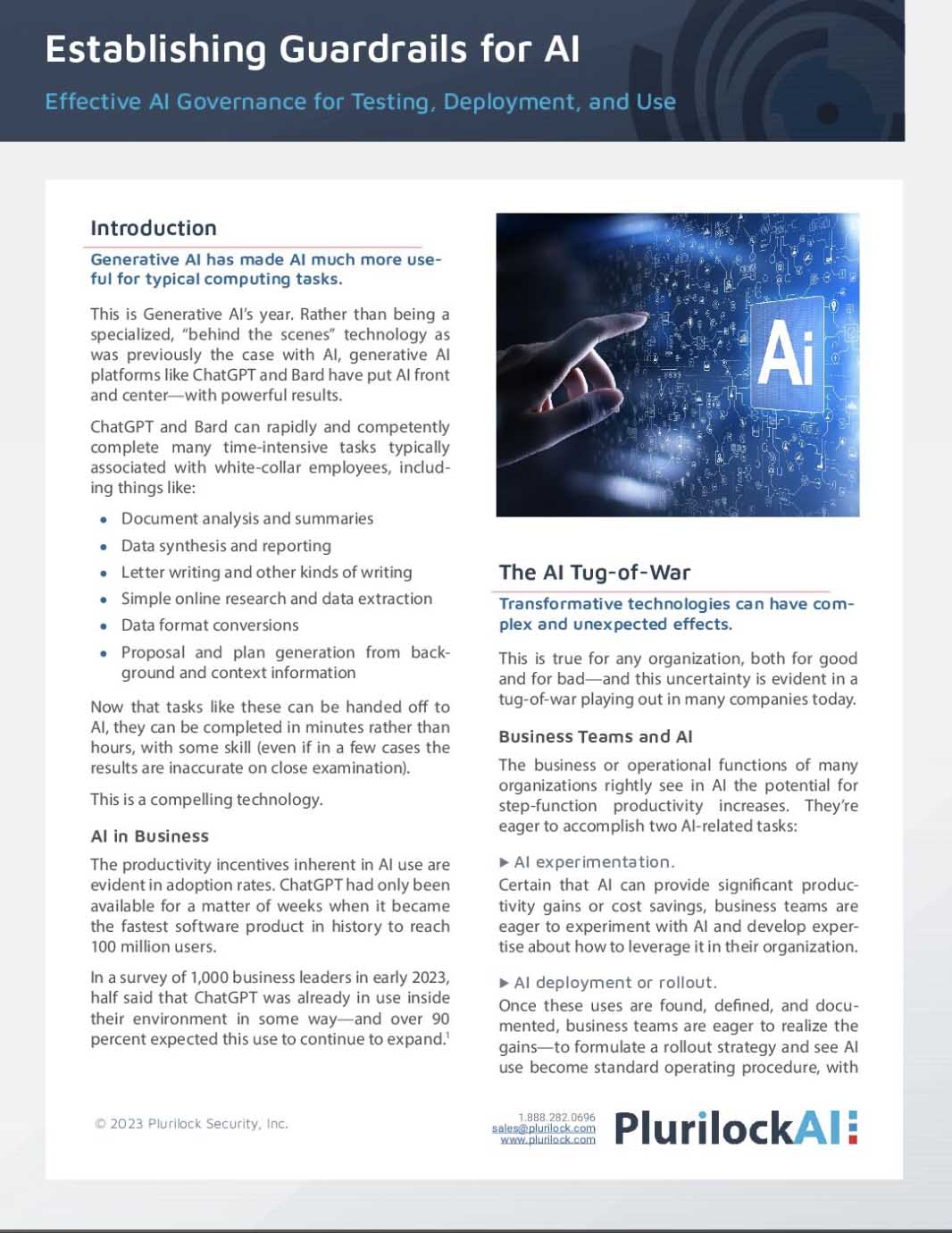
Establishing Guardrails for AI Whitepaper