Cybersecurity Reference > Glossary
What is Vendor Concentration Risk?

This dependency creates a single point of failure that can amplify the impact of vendor-side security incidents, outages, or business failures across an organization's entire technology environment.
The problem goes beyond simple service disruption. When you concentrate your technology stack with one or two vendors, you inherit their complete risk profile—their security weaknesses, their operational vulnerabilities, their business stability issues. A breach at the vendor level doesn't just affect one system; it cascades through everything that depends on that vendor's products. The 2020 SolarWinds compromise illustrated this dramatically, where attackers used a single trusted vendor as a springboard to reach thousands of organizations simultaneously.
Concentration also constrains your response options during a crisis. If your primary vendor experiences a security incident, switching to alternatives becomes difficult when you lack established relationships or compatible infrastructure elsewhere. Organizations mitigate this risk through vendor diversification, maintaining viable alternative solutions, conducting rigorous vendor security assessments, and developing realistic contingency plans that account for vendor-level failures.
Origin
The security dimension gained prominence through the 2000s as supply chain attacks became more sophisticated. Attackers recognized that compromising a widely-used vendor could provide access to numerous targets simultaneously, making vendors attractive attack vectors rather than just potential points of failure. The shift toward cloud services in the 2010s intensified these concerns, as organizations moved critical workloads to a small number of large cloud providers.
Recent years have seen vendor concentration risk evolve into a strategic security consideration rather than just a procurement issue. High-profile supply chain compromises—from the Target breach that originated through an HVAC vendor to the widespread impact of the SolarWinds attack—demonstrated that vendor relationships create persistent security dependencies. Regulatory frameworks now increasingly require organizations to assess and document vendor concentration as part of their overall risk management, reflecting a matured understanding that your vendors' security posture directly determines your own.
Why It Matters
The cybersecurity industry faces a particular irony here. Many organizations consolidate security tools with a single vendor under the assumption that integration improves protection. But this creates a scenario where a vulnerability in the security platform itself can disable an organization's entire defense posture at once. Attackers understand this and increasingly target security vendors specifically because of their concentrated market position.
Geopolitical factors add another dimension. Organizations operating globally must consider scenarios where access to certain vendors might be restricted due to trade disputes, sanctions, or national security concerns. The dependency on vendors from specific countries can become a strategic vulnerability independent of the vendor's technical security.
Perhaps most challenging is the lock-in effect that vendor concentration creates. The deeper your dependency on a particular vendor's ecosystem, the more difficult and expensive it becomes to diversify. This makes vendor concentration a compounding risk—the longer it persists, the harder it is to address, even as the potential impact grows.
The Plurilock Advantage
We work as an independent systems integrator without vendor allegiance, which means we evaluate your technology stack based on your needs rather than partnership incentives.
Our team includes former intelligence professionals and Fortune 500 CISOs who've managed vendor relationships at scale and understand how to build resilient architectures that don't depend on any single provider's continued availability or security posture.
.
Need Help Managing Vendor Dependencies?
Plurilock's risk assessment services identify and mitigate dangerous vendor concentration exposures.
Get Risk Assessment → Learn more →Downloadable References
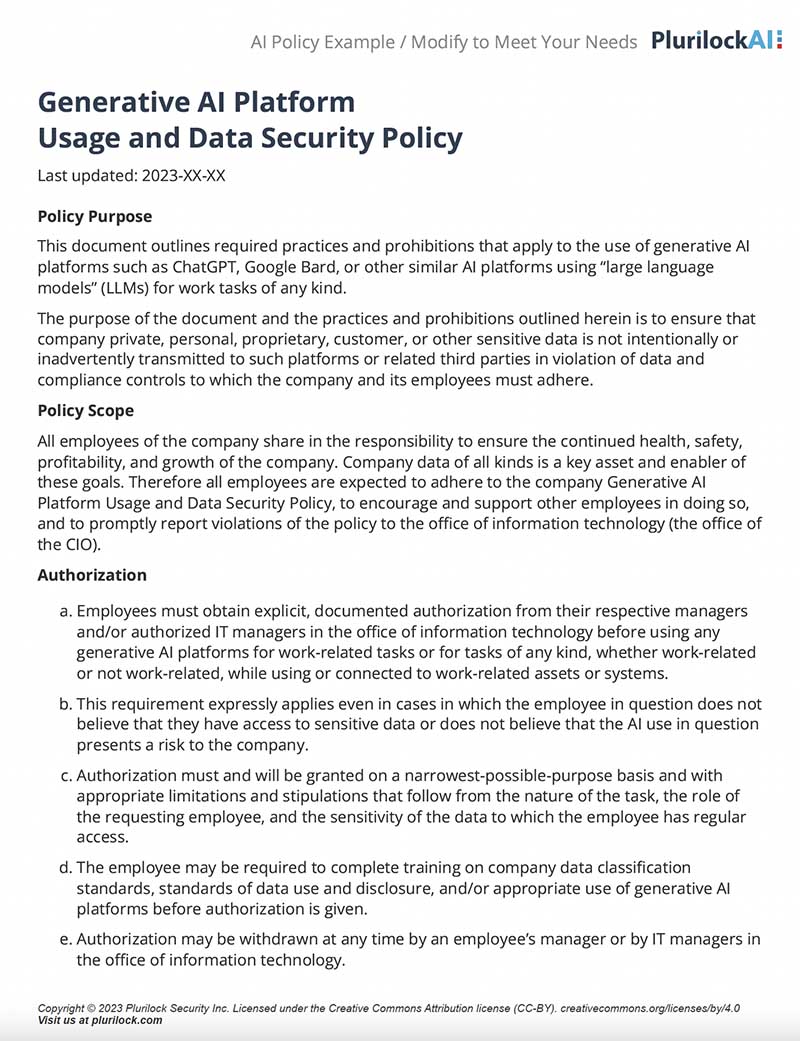
Sample Governance Policy for AI Use
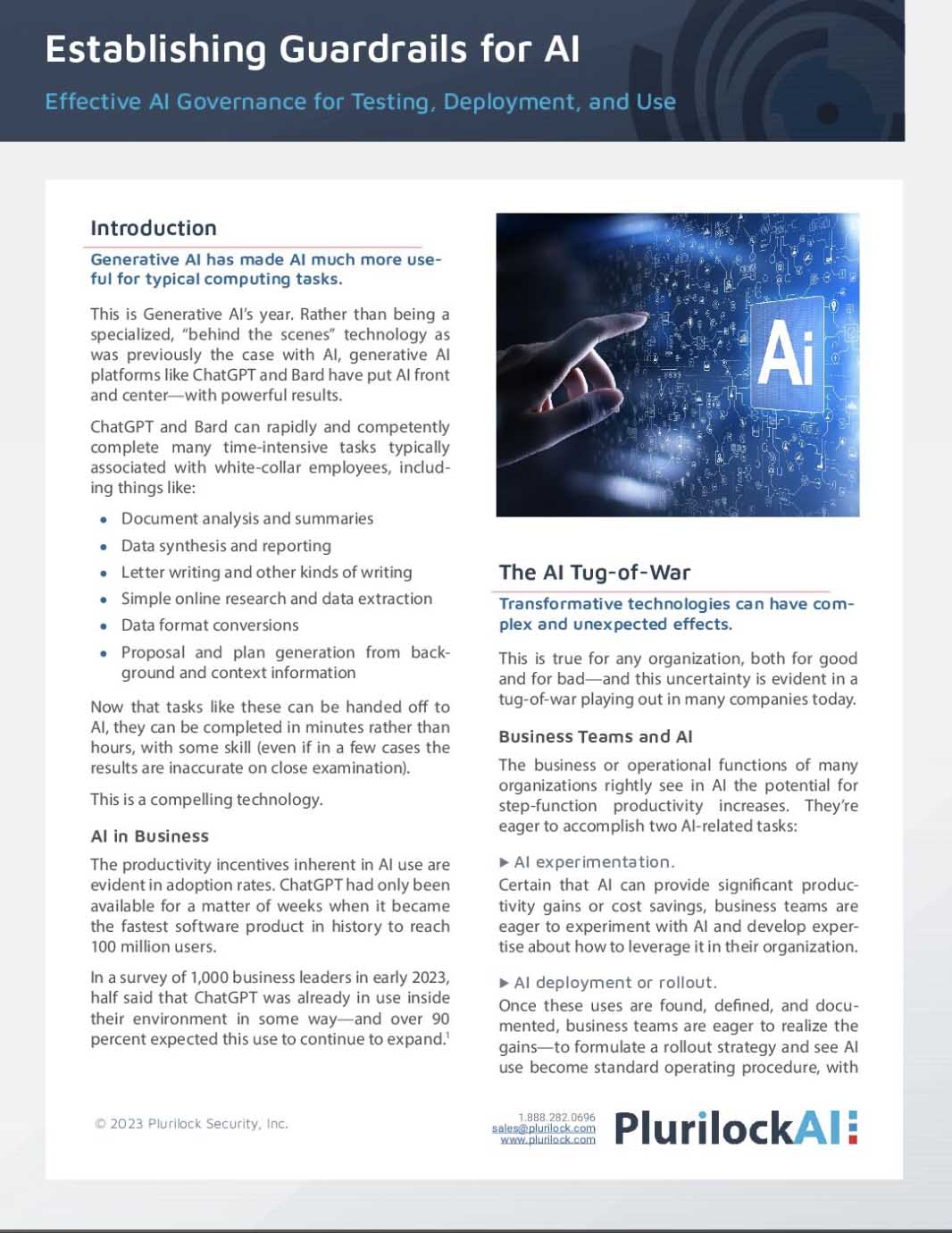
Establishing Guardrails for AI Whitepaper