Cybersecurity Reference > Glossary
What is Authentication Assurance Level (AAL)?

It represents how certain you can be that the person accessing a system is truly who they claim to be. Think of it as a graded scale of trust, where different situations call for different levels of proof.
Most frameworks, including NIST's Digital Identity Guidelines, define these levels numerically. AAL1 provides basic single-factor authentication—username and password, essentially. AAL2 requires multi-factor authentication, adding something like a code from your phone or a hardware token. AAL3 demands cryptographic verification with hardware-based authenticators resistant to tampering. AAL4, used in the most sensitive contexts, typically requires in-person identity proofing and the highest-grade cryptographic hardware.
The practical value lies in matching authentication strength to risk. Public information might need only AAL1, while financial transactions demand AAL2 or AAL3. Classified government systems often require AAL4. This framework helps organizations avoid both under-protecting sensitive resources and over-complicating access to low-risk systems. It also provides a common language for compliance requirements, letting regulators specify minimum assurance levels for different data types rather than prescribing specific technologies.
Origin
The formalization of assurance levels gained momentum in the early 2000s as e-government initiatives needed ways to trust remote users for increasingly sensitive transactions. The federal government couldn't treat someone accessing a weather website the same as someone applying for security clearance online. The Office of Management and Budget issued guidance in 2003 that began defining levels of authentication assurance tied to risk.
NIST codified these ideas in Special Publication 800-63, first published in 2004 and revised several times since. The framework drew from earlier work in cryptographic standards and public key infrastructure but applied it systematically to the broader authentication problem. Other frameworks emerged internationally, including the UK's Government Gateway and the European eIDAS regulation, though NIST's model became particularly influential in both government and commercial sectors. The framework has evolved alongside authentication technology—early versions focused heavily on passwords and PKI, while recent revisions accommodate biometrics, behavioral analytics, and risk-based authentication.
Why It Matters
The rise of credential theft and account takeover attacks has made weak authentication a major vulnerability. Attackers routinely compromise passwords through phishing, credential stuffing, and social engineering. When a stolen password grants access to sensitive systems, the consequences can be catastrophic. Assurance levels provide a structured approach to requiring stronger authentication where it matters most, without creating friction everywhere.
Compliance drives much of the practical application. Regulations like CMMC for defense contractors, FedRAMP for cloud providers serving government, and various financial services regulations explicitly reference authentication assurance requirements. Organizations must demonstrate they're using appropriate authentication strength, and assurance levels provide the measurement framework.
The challenge lies in implementation. Higher assurance levels mean more complexity, more cost, and potentially more user friction. Organizations must balance security needs against usability, deploy the necessary infrastructure for strong authentication, and manage the lifecycle of hardware tokens or biometric systems. Getting this balance wrong either leaves systems vulnerable or makes them so cumbersome that users find workarounds.
The Plurilock Advantage
Whether you need to achieve specific compliance mandates or simply want to modernize authentication to address current threats, we bring deep expertise in identity architectures. Learn more about our identity and access management services.
.
Need Higher Authentication Assurance Levels?
Plurilock's advanced authentication solutions can elevate your organization's security posture significantly.
Enhance Authentication Now → Learn more →Downloadable References
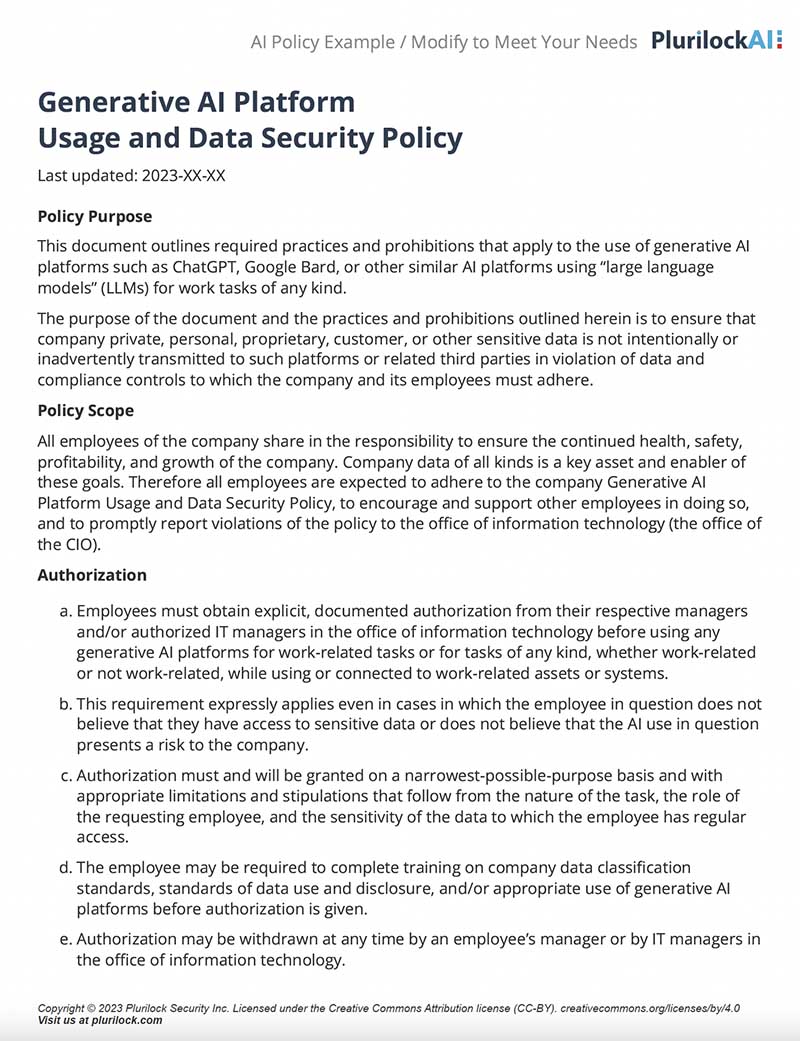
Sample Governance Policy for AI Use
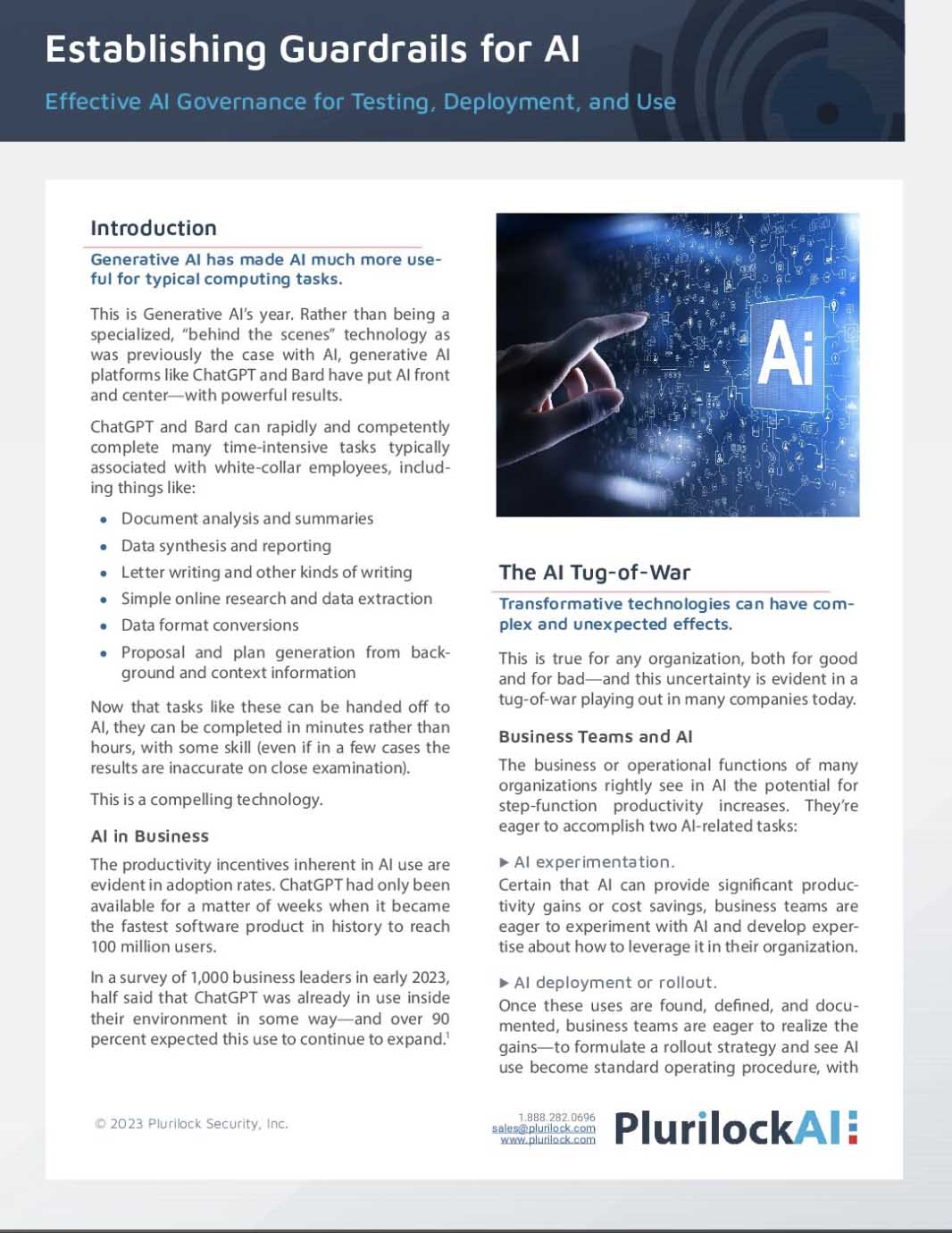
Establishing Guardrails for AI Whitepaper