Cybersecurity Reference > Glossary
What is a Policy Decision Point (PDP)?





When a user or system attempts to access a resource, the PDP receives the request along with relevant contextual information and determines whether to permit or deny the action.
The PDP operates as part of a larger policy-based access control architecture, typically working alongside Policy Enforcement Points (PEPs) that intercept access requests and Policy Information Points (PIPs) that provide additional attribute data. The PDP evaluates requests against a centralized policy repository, considering factors such as user identity, resource sensitivity, time of access, location, and other contextual attributes.
This centralized approach to authorization enables consistent policy enforcement across distributed systems and applications. PDPs are commonly implemented in enterprise environments using standards like XACML (eXtensible Access Control Markup Language) or integrated into identity and access management platforms. By separating policy decisions from policy enforcement, organizations can maintain fine-grained access controls while ensuring scalability and manageability across complex IT infrastructures.
Origin
XACML, released by OASIS in 2003, formalized the PDP architecture and provided a standard way to express and evaluate access control policies. This specification defined clear boundaries between the components that make decisions, enforce them, and provide the data needed for evaluation. The goal was to create a reusable authorization infrastructure that could work across different applications and platforms.
As zero trust architectures gained prominence in the 2010s, the PDP model became even more relevant. Modern implementations have evolved beyond the original XACML specification to include real-time risk assessment, behavioral analytics, and continuous authorization rather than simple one-time permit-or-deny decisions. Cloud-native architectures and microservices have further pushed the need for centralized policy decision points that can scale horizontally and respond to requests in milliseconds.
Why It Matters
PDPs become critical in zero trust implementations, where every access request must be evaluated based on current context rather than implicit trust. They enable organizations to move beyond simple role-based access to consider dynamic factors like device health, network location, recent authentication strength, and even behavioral patterns. This matters because modern threats often involve compromised credentials being used from unexpected contexts.
The ability to update policies centrally and have those changes take effect immediately across all connected systems provides both security and agility. When a new threat emerges or a user's role changes, organizations can adjust authorization rules once rather than updating dozens or hundreds of individual applications. This centralized control is particularly valuable during security incidents when rapid policy changes may be necessary to contain a breach or block suspicious patterns of access.
The Plurilock Advantage
We help organizations design authorization architectures that balance security requirements with performance needs, integrate PDPs with existing IAM infrastructure, and develop policy frameworks that reflect real business logic rather than theoretical models. Whether you're modernizing legacy access controls or building a zero trust architecture from scratch, we focus on implementations that actually work in production rather than just in PowerPoint presentations.
.
Need Help Implementing Policy Decision Points?
Plurilock's experts can design and deploy PDP solutions tailored to your organization.
Get PDP Implementation Support → Learn more →Downloadable References
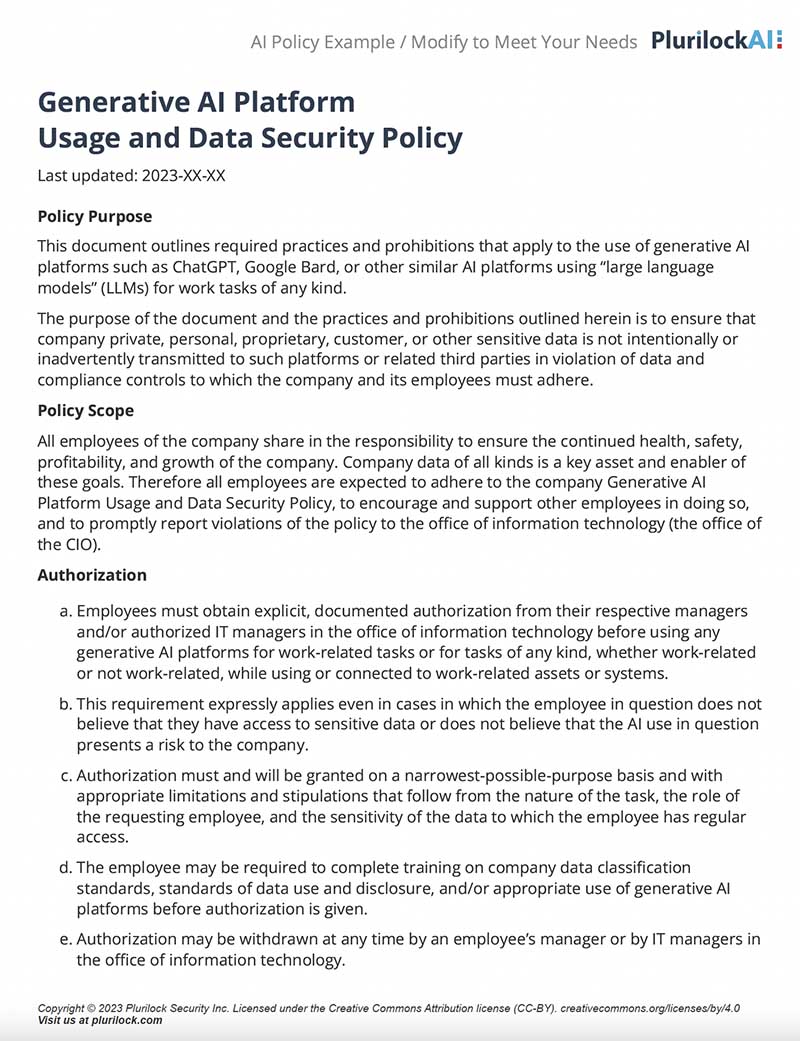
Sample Governance Policy for AI Use
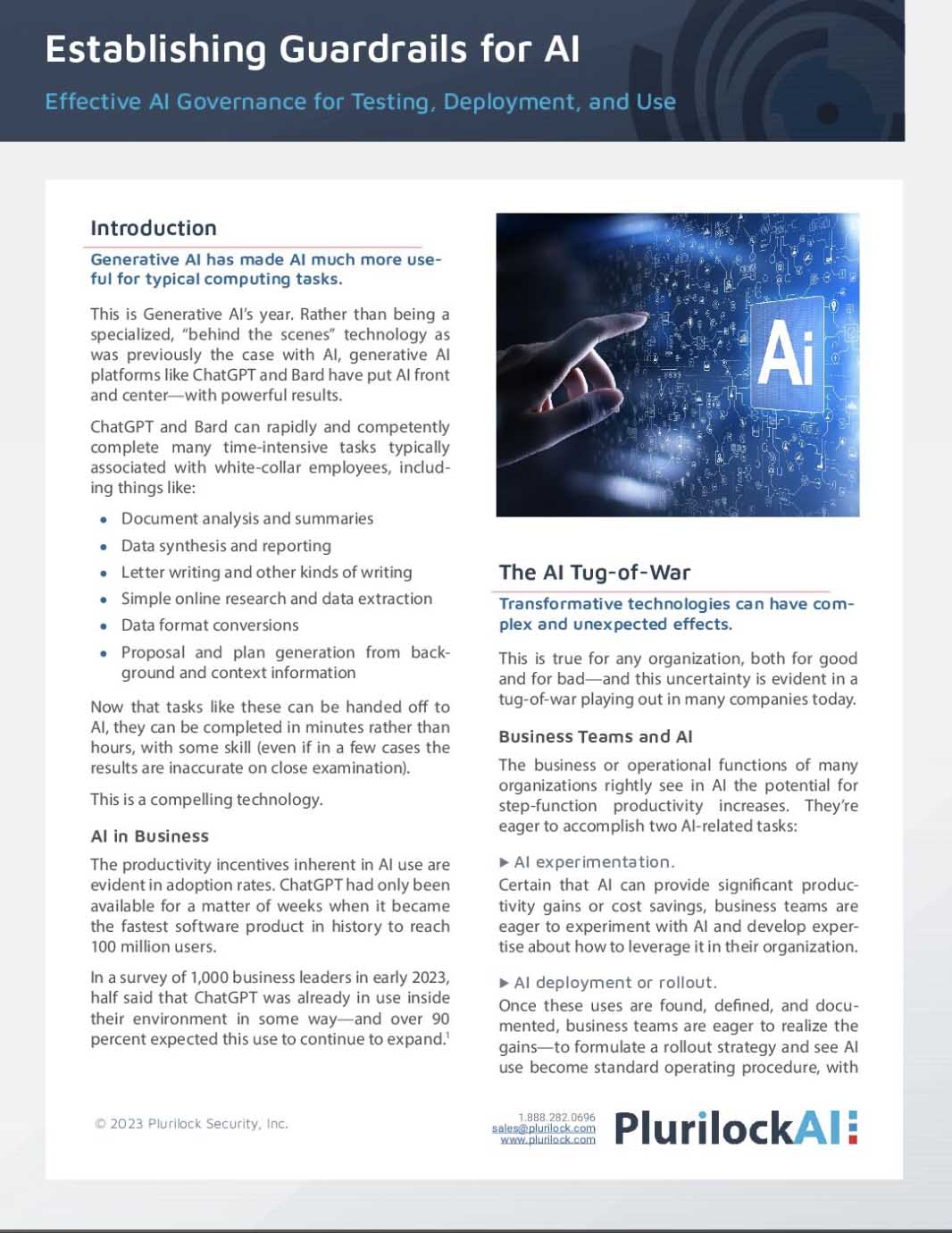
Establishing Guardrails for AI Whitepaper