Cybersecurity Reference > Glossary
What is the Sarbanes Oxley Act (SOX Act)?





While its original focus was accounting fraud, the law's requirements for accurate financial disclosure and internal control systems have significant cybersecurity implications. The Securities and Exchange Commission has clarified that companies must disclose material cybersecurity risks and incidents when they could affect investor decisions—meaning breaches, vulnerabilities, or ongoing threats that might lead to financial losses, legal liability, or damage to the company's reputation.
SOX requires companies to maintain controls that ensure proper identification, documentation, and disclosure of these cybersecurity matters. This isn't just about reporting breaches after they happen. Companies need systems to assess which security issues rise to the materiality threshold and processes to communicate them accurately to investors. The law's provisions around internal controls (particularly Section 404) often translate into requirements for IT security controls, audit trails, and segregation of duties in systems that touch financial data. For cybersecurity teams, SOX compliance means demonstrating that security controls are documented, tested, and effective at protecting the integrity of financial systems and data.
Origin
Cybersecurity wasn't a primary concern when SOX was drafted—the term "cybersecurity" barely existed in common usage then. But the law's requirements for internal controls and accurate disclosure created obligations that would grow in relevance as businesses moved operations online. By the late 2000s, as data breaches became more common and costly, the SEC began issuing guidance on how SOX applied to cyber risks. The key interpretive guidance came in 2011 and was updated in 2018, explicitly stating that material cybersecurity incidents must be disclosed and that controls around cybersecurity should be part of a company's broader internal control framework. What started as a response to accounting fraud evolved into one of the legal foundations for cybersecurity disclosure requirements in public companies.
Why It Matters
The materiality standard creates practical challenges. Companies must assess whether a given security incident or vulnerability could influence investor decisions, which requires judgment about potential financial impact, legal exposure, and reputational damage. Get it wrong—fail to disclose something material or disclose inaccurately—and executives face potential penalties, including fines and even criminal liability in cases of willful misconduct. The law also requires maintaining audit trails and documentation that prove security controls are functioning, which means cybersecurity programs need to be measurable and auditable. For many organizations, SOX compliance drives investments in security monitoring, access controls, change management, and incident response capabilities. The law has effectively made cybersecurity a board-level governance issue, not just a technical one.
The Plurilock Advantage
Our team includes former Fortune 500 CISOs who understand how to translate security measures into compliance evidence and materiality assessments. We help you build security programs that aren't just effective but demonstrably so.
Learn more about our governance, risk, and compliance services.
.
Downloadable References
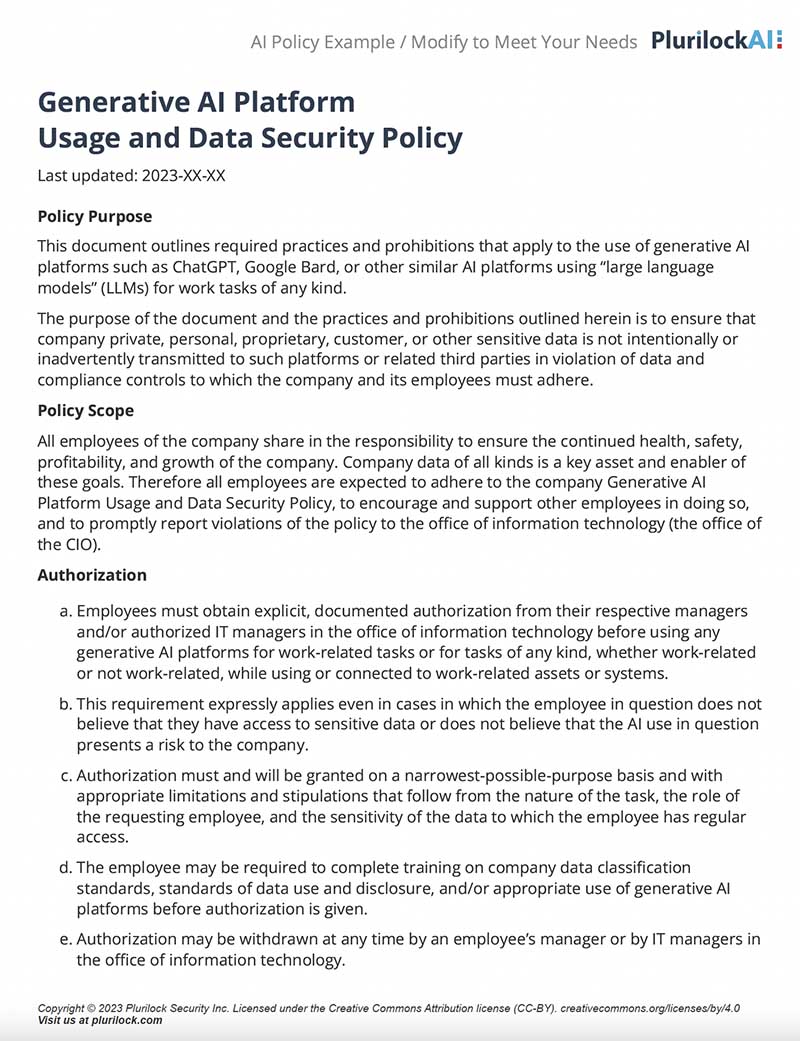
Sample Governance Policy for AI Use

Establishing Guardrails for AI Whitepaper