Cybersecurity Reference > Glossary
Exploit Readiness





Exploit readiness is the state in which a system or organization is prepared to identify, respond to, and mitigate potential exploits against their infrastructure.
This encompasses having the necessary tools, processes, personnel, and knowledge in place to detect when vulnerabilities are being actively exploited and to respond effectively to minimize damage.
Key components of exploit readiness include maintaining current threat intelligence, deploying appropriate monitoring and detection systems, establishing incident response procedures, and ensuring security teams are trained to recognize exploitation attempts. Organizations with strong exploit readiness typically maintain vulnerability management programs, conduct regular security assessments, and have established communication channels for rapidly sharing threat information.
Exploit readiness differs from general cybersecurity preparedness in its specific focus on active exploitation scenarios rather than just potential vulnerabilities. It requires understanding the threat landscape, knowing which systems are most likely to be targeted, and having pre-planned responses for different types of attacks. This proactive stance enables organizations to reduce dwell time—the period between initial compromise and detection—and minimize the impact of successful exploits through rapid containment and remediation efforts.
Need Protection Against Zero-Day Exploits?
Plurilock's exploit readiness services help organizations prepare for emerging threats.
Assess Our Readiness → Learn more →Downloadable References
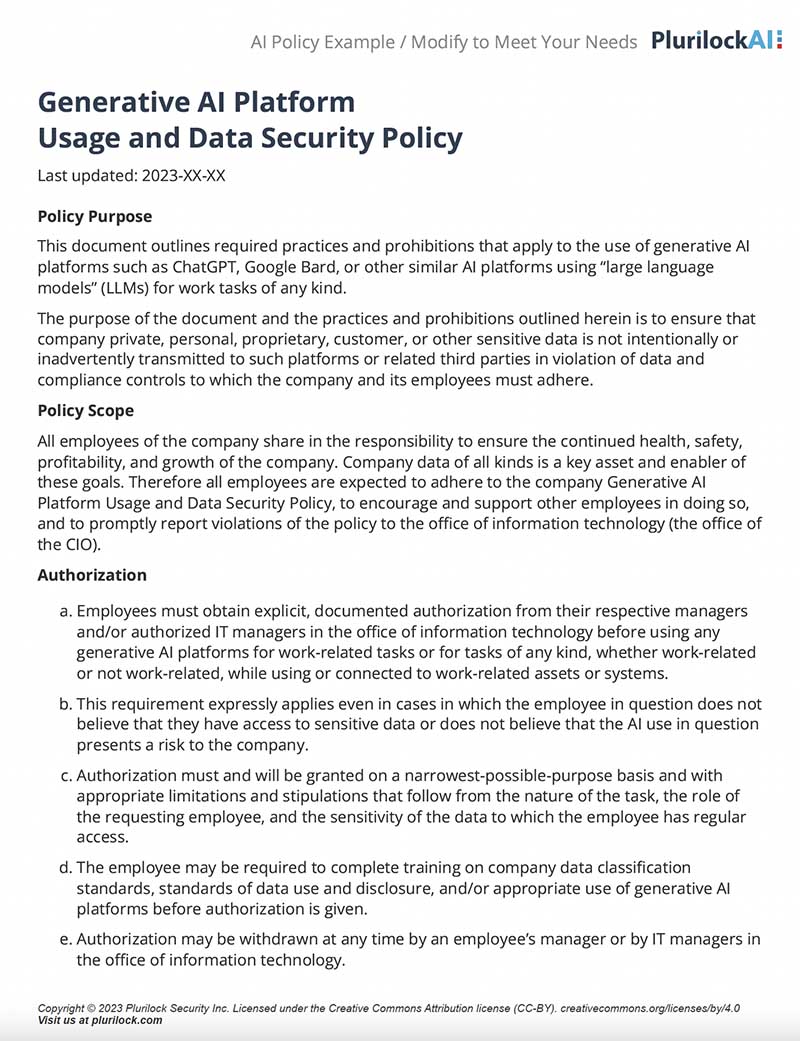
Sample Governance Policy for AI Use

Establishing Guardrails for AI Whitepaper